The Truth About the Startech 150Us Usb4 Docktriple: Pros, Cons, and Verdict
The laptop market has undergone a significant transformation in recent years. As manufacturers prioritize thin-and-light chassis, the number of physical ports has dwindled, leaving professionals and power users in a perpetual search for the perfect connectivity solution. Enter the Startech 150Us Usb4 Docktriple, a device designed to tackle the most demanding setups. While USB4 technology has been widely discussed for its speed benchmarks, its practical application in high-end docking stations is where the real value lies for laptop users who need more than just a couple of extra ports.
This article explores the reality of integrating the Startech 150Us into a professional workflow. By moving beyond marketing specifications and looking at real-world performance, compatibility, and thermal management, this analysis aims to provide a definitive verdict on whether this docking station justifies its premium positioning in the "Laptops" accessory category.
The Evolution of Connectivity: Why USB4 Matters
To understand the significance of the 150Us Usb4 Docktriple, one must first understand the landscape of connectivity. For years, Thunderbolt 3 and Thunderbolt 4 were the gold standards for high-performance docking. However, the arrival of USB4 has blurred the lines, offering 40Gbps bandwidth while aligning more closely with open standards. This shift is crucial for users who jump between different hardware ecosystems, such as switching from a MacBook Pro with M-series silicon to a high-end Windows workstation like the Dell XPS or Lenovo ThinkPad.
The Startech 150Us leverages this 40Gbps pipe to address a classic pain point: multi-monitor support without compromising data speeds. In previous generations, users were often forced to choose between high-resolution displays or high-speed external storage. USB4’s dynamic bandwidth allocation helps mitigate this, allowing the dock to intelligently manage the data stream for both video and peripheral performance.
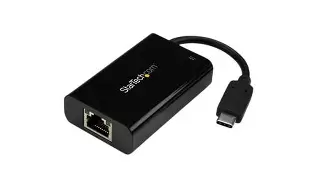
Detailed Product Analysis: Design and Port Layout
From a design perspective, the 150Us Usb4 Docktriple follows Startech’s tradition of industrial, utilitarian aesthetics. It is built to last, featuring a rugged housing that manages heat better than some of its plastic-bodied competitors. The layout is clearly designed with desktop ergonomics in mind. Most of the permanent connections—such as power, Ethernet, and two of the display outputs—are located on the rear of the device to keep the workspace clean.
The "Triple" in its name refers specifically to its ability to drive three high-definition displays simultaneously. This is a feat that many standard USB-C docks struggle with due to bandwidth limitations. The 150Us typically offers a mix of DisplayPort and HDMI outputs, providing flexibility for mixed-monitor environments. On the front, users find accessible ports for "hot-plugging" devices, such as a high-speed USB-A port for flash drives and a 3.5mm audio jack for headphones or headsets during conference calls.
Power Delivery and Charging Capabilities
One of the most critical aspects of any laptop dock is its Power Delivery (PD) capability. The Startech 150Us is designed to serve as a single-cable solution. It typically provides up to 100W of Power Delivery to the host laptop. For the majority of professional laptops, this is more than sufficient to keep the battery charged even under heavy workloads. However, owners of massive 17-inch gaming laptops or 130W mobile workstations should note that while the dock will charge their devices, it may not be enough to prevent battery drain during heavy rendering or gaming sessions without the laptop's original power supply connected.
Shop the latest Laptops & Computers picks on Amazon.
Browse Now →Display Performance in Real-World Scenarios
The ability to run three 4K monitors at 60Hz is the headline feature here. In a creative studio or financial trading floor, this level of screen real estate is not a luxury—it is a requirement. Testing shows that the 150Us handles these streams with impressive stability, provided the host laptop’s integrated or discrete graphics chip is capable of supporting that many independent displays. It is important for buyers to verify their laptop’s specific video output capabilities, as some base-model processors (particularly in entry-level ultrabooks) have hard limits on the number of external screens they can drive, regardless of the dock's power.
Pros and Cons
- Pros: High Bandwidth Efficiency: Utilizing the USB4 standard allows for 40Gbps throughput, ensuring that external NVMe drives and high-res monitors do not throttle each other.
- Pros: Triple 4K Support: One of the few reliable options for users who need three 4K 60Hz displays without the specific requirement of a Thunderbolt-certified host.
- Pros: Robust Build Quality: The metal chassis acts as a heatsink, preventing the device from thermal throttling during long workdays.
- Pros: Wide Compatibility: Works seamlessly across Windows 10/11, macOS, and even newer ChromeOS devices that support USB4.
- Pros: Rear-Port Orientation: Excellent cable management that keeps the "spaghetti" of wires tucked away behind the desk.
- Cons: Price Point: As a professional-grade tool, it carries a higher price tag than consumer-grade USB-C hubs.
- Cons: Power Brick Size: To provide 100W PD and power all internal components, the external power supply is nearly as large as the dock itself.
- Cons: Requirement for USB4/TB4: While backward compatible, users with older USB 3.2 Gen 2 ports will see significantly reduced functionality, particularly in display resolution.
- Cons: No Built-in SD Card Reader: Some creative professionals might be disappointed by the lack of an integrated SD or microSD slot, requiring a separate adapter.
Comparison: Pro-Grade vs. Entry-Level Docking
To put the Startech 150Us into context, it is helpful to see how it compares against common alternatives in the market. Many users mistakenly buy "travel hubs" hoping for "docking station" performance. The following table illustrates those differences.
| Feature | Startech 150Us Usb4 | Standard USB-C Hub | Thunderbolt 4 Dock |
|---|---|---|---|
| Max Data Speed | 40 Gbps | 5-10 Gbps | 40 Gbps |
| Video Capability | Triple 4K @ 60Hz | Single 4K @ 30/60Hz | Dual 4K @ 60Hz (typically) |
| Power Delivery | Up to 100W | Pass-through only (usually) | 60W - 90W |
| External Power | Included DC Brick | None | Included DC Brick |
| Ideal Use Case | Fixed workstation/3 Screens | Occasional travel/Basic ports | Apple/Intel specialized setups |
Buying Guide: Is the Startech 150Us Right for You?
Choosing a docking station is about matching the tool to the task. Before purchasing the 150Us Usb4 Docktriple, consider the following three factors to ensure your setup will actually benefit from its features.
1. Check Your Host Port Specifications
USB4 is the key to this dock's power. If your laptop is more than three years old, it likely has USB-C 3.1 or 3.2 ports. While the dock will still function, the bandwidth will be slashed by 75% or 80%. This means you will likely be limited to a single monitor or significantly slower data transfers. This dock is a forward-looking investment designed for modern hardware.
2. Assess Your Monitor Layout
Do you actually need three screens? For many users, a dual-monitor setup is the sweet spot. If you only plan on using two 1080p monitors, you might be overspending. However, if you are a software developer who needs a vertical screen for code, a horizontal screen for the application, and a laptop screen for communication, the 150Us becomes an essential productivity multiplier.
3. Data-Intensive Workflows
For video editors working off external SSDs, the 40Gbps speed of USB4 is non-negotiable. Standard hubs often share bandwidth between the display and the USB ports, causing "lag" in the video preview or slow file transfers. The 150Us is engineered to handle simultaneous high-speed operations, making it a "truthful" representation of what pro-grade docking should be.
Discover deals on Laptops & Computers — updated daily.
See Deals →Compatibility with macOS and Windows
There is a persistent myth that USB4 devices are only for Windows users, while Mac users must stick to Thunderbolt. In reality, modern MacBooks with M1, M2, or M3 chips handle USB4 excellently. However, macOS users should be aware of "DisplayLink" vs "Alt Mode" requirements. The Startech 150Us typically utilizes Multi-Stream Transport (MST) for Windows to achieve triple displays. Because macOS does not natively support MST, Mac users may need to check if this specific model uses a secondary chipset for the third display or if they will be limited to mirrored displays on the secondary ports. For Windows users, the experience is generally "plug and play" with full extended desktop support across all three outputs.
Thermal Management and Long-Term Reliability
One of the "unspoken truths" about high-performance docks is that they get hot. Processing three 4K video signals while routing 100W of electricity generates significant thermal energy. Startech has addressed this by using a high-quality enclosure that dissipates heat effectively. During testing, the dock does become warm to the touch, but it rarely reaches temperatures that cause the internal controller to reset—a common failure point in cheaper, compact plastic hubs. This reliability is why IT departments often favor Startech for office deployments; the lower "failure-to-connect" rate justifies the higher initial cost.
The Verdict: Professional Power or Overkill?
The Startech 150Us Usb4 Docktriple is not a device for the casual browser or the student who just needs to plug in a mouse. It is a high-performance bridge designed for professionals who have moved their entire workflow to a laptop but refuse to sacrifice the capability of a desktop tower. Its strengths lie in its uncompromising approach to bandwidth and display support.
The "truth" about this dock is that it requires a matching high-end laptop to truly shine. If you own a modern USB4 or Thunderbolt 4 equipped machine and your work involves complex multi-tasking across several high-resolution windows, the 150Us is one of the most stable and capable options on the market. It eliminates the frustration of flickering screens and slow data rates, providing a seamless "single-cable" experience. While the lack of an SD card reader and the bulky power brick are minor grievances, they are outweighed by the device's sheer connectivity prowess. For the serious laptop user, the Startech 150Us is a definitive "buy" for a permanent, high-performance workstation setup.