Which Is Better Value? Denon Home 350 vs Jbl Charge 6 Compared
The landscape of wireless audio has shifted dramatically over the last decade. Consumers no longer have to choose between a strictly wired high-fidelity home system and a weak, tinny portable speaker. Today, the market is bifurcated into two primary philosophies: the high-performance home wireless speaker and the rugged, go-anywhere portable powerhouse. Comparing the Denon Home 350 and the JBL Charge 6—the latter being the newest iteration in a legendary line of waterproof speakers—presents a fascinating study in "value." Because these two devices serve different lifestyle niches, determining which offers more for your money requires look at build quality, acoustic engineering, connectivity, and practical longevity.
Value is rarely just about the lowest price tag; it is about the intersection of performance and utility. A speaker that costs twice as much but lasts ten years and replaces a full stereo setup may technically be a better value than a budget-friendly portable that requires replacement or lacks the "room-filling" power needed for daily home listening. Conversely, if you spend hundreds on a stationary titan that you can never take to the beach, that investment sits idle when you’re on the move. In this article, we break down these two heavyweights to see which one deserves a spot in your audio arsenal.
Understanding the Contenders
On one side, we have the Denon Home 350. This is the flagship of Denon’s wireless range, designed to compete with the likes of the Sonos Five. It is a large, mains-powered unit meant to act as the primary audio source in a living room, kitchen, or open-plan office. Its value proposition is built on high-resolution audio support, deep integration with the HEOS ecosystem, and a driver array that rivals traditional bookshelf speakers.
On the other side is the JBL Charge 6. As the successor to the immensely popular Charge 5, this speaker represents the pinnacle of "utility audio." It is built to be dropped, splashed, and used as a power bank for your phone. Its value is found in its versatility. While it cannot match the sheer output of the Denon, it offers a level of freedom that stationary speakers simply cannot provide. To understand which is better for you, we must look deeper into the technical specifications and real-world performance of each.
Detailed Product Analysis: Denon Home 350
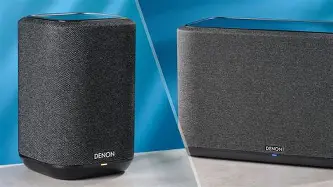
The Denon Home 350 is an absolute beast of a wireless speaker. Weighing in at over 13 pounds, it immediately communicates a sense of "old school" hi-fi density. Denon hasn't cut corners with the internal components. It features a six-driver arrangement: two 6.5-inch woofers, two 2-inch mid-range drivers, and two 1-inch tweeters. Each of these drivers is powered by its own dedicated Class-D amplifier, ensuring that even at high volumes, the sound remains composed and distortion-free.
What sets the Denon apart in terms of value for audiophiles is its support for high-resolution audio. It can handle ALAC, FLAC, and WAV files up to 192kHz/24-bit, as well as DSD 2.8MHz and 5.6MHz tracks. For a user who has a curated library of lossless music or subscribes to high-tier streaming services, the Denon Home 350 provides the transparency needed to actually hear the difference. The soundstage is remarkably wide for a single-box solution, and the bass response is physical—reaching deep enough to make a dedicated subwoofer feel optional in most rooms.
Connectivity is another area where the Denon excels. Beyond Bluetooth, it offers Wi-Fi, AirPlay 2, and HEOS built-in. HEOS allows for multi-room synchronization and access to almost every major streaming service. It also includes physical inputs: a 3.5mm auxiliary port and a USB port for local file playback. The touch-sensitive controls on the top panel feature a proximity sensor that lights up as your hand approaches—a premium touch that justifies its higher price point.
Pros and Cons of the Denon Home 350
- Pro: Exceptional sound quality with genuine high-resolution audio support.
- Pro: Massive dual 6.5-inch woofers provide industry-leading bass for a standalone wireless speaker.
- Pro: Robust multi-room capabilities via the HEOS platform and AirPlay 2.
- Pro: Physical inputs (Aux/USB) allow for versatile connection to non-wireless sources like turntables or local drives.
- Con: Lacks a battery; it is strictly a "tethered" device that requires a wall outlet.
- Con: Large footprint makes it difficult to place on smaller bookshelves or crowded nightstands.
- Con: The HEOS app, while functional, can sometimes feel less intuitive than competitors like Sonos or Spotify Connect.
Detailed Product Analysis: JBL Charge 6
The JBL Charge 6 follows the "if it ain't broke, don't fix it" design philosophy, but with meaningful refinements over its predecessors. It is significantly smaller and lighter than the Denon, designed to be tossed into a backpack. The "Charge" name comes from its ability to share its 20-hour battery life with your mobile devices via a USB-C out port, a feature that has saved many outdoor gatherings from ending early because of a dead phone.
In terms of audio, the Charge 6 utilizes JBL’s signature "Original Pro Sound." It features an optimized long-excursion driver, a separate tweeter, and dual pumping JBL bass radiators at either end. While it doesn't have the stereo separation of the Denon 350, it produces a punchy, energetic sound that is specifically tuned for modern genres like pop, EDM, and hip-hop. It excels at projecting sound in outdoor environments where there are no walls to reflect the audio.
Shop the latest Audio & Headphones picks on Amazon.
See Deals →The real value of the Charge 6 lies in its durability. With an IP67 rating, it is completely dustproof and waterproof. It can be submerged in a meter of water for 30 minutes and emerge playing perfectly. For hikers, beach-goers, or anyone with a busy household where spills are common, this "indestructibility" is a core part of the product's value. It also features JBL PartyBoost, allowing you to link it with hundreds of other compatible JBL speakers to create a massive wall of sound.
Pros and Cons of the JBL Charge 6
- Pro: Extremely portable and durable with IP67 water and dust resistance.
- Pro: Built-in power bank functionality to charge smartphones and tablets on the go.
- Pro: Excellent battery life (up to 20 hours) for all-day use away from an outlet.
- Pro: User-friendly interface and reliable Bluetooth 5.3 connectivity.
- Con: Mono sound output lacks the depth and stereo width of larger home units.
- Con: Becomes harsh and loses bass impact at maximum volume levels.
- Con: No Wi-Fi or high-resolution audio support; limited to standard Bluetooth codecs.
Head-to-Head Comparison
To truly compare the value, we have to look at how these specs translate into the user experience. The Denon is a "destination" speaker—you go to the room where it is to enjoy music. The JBL is an "accompaniment" speaker—it follows you throughout your day. Below is a breakdown of how they stack up across critical categories.
| Feature | Denon Home 350 | JBL Charge 6 |
|---|---|---|
| Primary Use | High-Fidelity Home Audio | Portable & Outdoor Utility |
| Driver Count | 6 (2 Woofers, 2 Mids, 2 Tweeters) | 2 (1 Woofer, 1 Tweeter) + 2 Radiators |
| Power Source | AC Power (Required) | Internal Battery (20 hrs) |
| Connectivity | Wi-Fi, Bluetooth, AirPlay 2, HEOS, Aux, USB | Bluetooth 5.3, USB (Power Out) |
| Hi-Res Support | Yes (Up to 192kHz/24-bit) | No |
| Durability | Indoor Only (Fabric/Plastic) | IP67 Waterproof/Dustproof |
| Audio Profile | Neutral, Expansive, Audiophile-grade | Bass-forward, Energetic, V-shaped |
Real-World Use Cases: Where Each Wins
To determine "better value," we must look at the typical buyer’s environment. Imagine a professional who lives in a medium-sized apartment. They want one speaker that can handle morning podcasts, provide a "party mode" for a dinner gathering, and potentially connect to their television via an auxiliary cable to improve movie night. In this scenario, the Denon Home 350 is the superior value. Its ability to replace multiple devices and deliver a "hi-fi" experience makes its higher price tag an investment in home lifestyle quality.
Now, consider a college student or an outdoor enthusiast. Their life moves between dorm rooms, parks, and weekend trips. They need a speaker that can survive a rain shower, fit in a gym bag, and act as a backup battery for their phone when they're away from a wall. For them, the Denon Home 350 would be a "white elephant"—impressive, but ultimately useless for their needs. The JBL Charge 6, at a fraction of the cost, provides 100% of the utility they require. In this context, the JBL is the high-value champion.
The Buying Guide: How to Choose
If you are still undecided, consider the following three factors: your primary listening location, your source material, and your durability needs.
1. Listening Location and Fixed vs. Mobile
Ask yourself: "How many times a week do I move my speaker?" If the answer is zero, stop looking at portables. Portable speakers like the JBL Charge 6 make significant acoustic sacrifices (smaller drivers, passive radiators instead of active woofers, mono instead of stereo) to accommodate a battery and a rugged frame. If your speaker is going to stay on your kitchen counter, the Denon Home 350 offers vastly more "sound-per-dollar." However, if you want sound on your patio, in your garage, or on vacation, the Denon becomes a burden, and the JBL’s portability becomes its primary value.
2. Source Material and Audio Quality
Do you listen to Spotify Free or standard YouTube? Or do you pay for Tidal HiFi, Qobuz, or Apple Music Lossless? If you are a casual listener, the nuanced engineering of the Denon Home 350 might be lost on you. The JBL Charge 6 is tuned to make standard-definition streams sound exciting and "fun." However, if you appreciate the texture of a cello or the breath of a vocalist in a high-resolution recording, the Denon is one of the few wireless speakers that can actually reproduce those details.
3. The Ecosystem Factor
Value is also found in how well a device plays with others. If you plan to expand your system later, the Denon Home 350 is part of the HEOS ecosystem. You can add a Denon soundbar and smaller HEOS speakers in other rooms to create a seamless whole-home audio network. JBL’s PartyBoost is great for syncing two Charge speakers for a party, but it isn't a comprehensive home audio solution. If you're building a "house of sound," the Denon is the better foundation.
Discover deals on Audio & Headphones — updated daily.
Shop Amazon →Sound Quality Deep Dive
It is worth exploring exactly why the Denon Home 350 sounds the way it does compared to the JBL. The Denon uses a "stereo-in-one" configuration. Because it has two tweeters and two mid-range drivers angled slightly outward, it can create a phantom center image. When you sit in front of it, you can perceive instruments placed in different locations. This is essential for classical music, jazz, and complex rock productions. The bass is handled by two 6.5-inch drivers, which is the same size found in many high-end bookshelf speakers. This allows the Denon to move a large volume of air, creating "effortless" bass that you feel in your chest without the speaker sounding like it's straining.

The JBL Charge 6, conversely, is a master of the "small box" sound. It uses a racetrack-shaped woofer to maximize surface area within a cylindrical body. The dual passive radiators on the sides are tuned to vibrate in sympathy with the internal woofer, extending the low-end further than a sealed box of this size should allow. While this result is impressive and "loud," it lacks the tonal accuracy of the Denon. The JBL has a "V-shaped" sound profile, meaning the bass and treble are boosted to make the music sound energetic, but the mid-range (where voices and guitars live) can sometimes feel recessed.
Which Provides Better Long-Term Value?
When we talk about value, we must also talk about longevity. Batteries are consumable items. The lithium-ion pack inside the JBL Charge 6 will eventually lose its capacity to hold a charge. After 3–5 years of heavy use, you may find the 20-hour battery only lasts 5 hours, or the speaker must remain plugged in, effectively turning it into a less-powerful stationary speaker. While batteries can sometimes be replaced, it is rarely an easy or supported process.
The Denon Home 350, being mains-powered, doesn't have this "expiration date." As long as the Wi-Fi standards and the HEOS app are supported, the speaker will continue to perform as well as it did on day one. Furthermore, because Denon is a subsidiary of Masimo (formerly Sound United), they have a long history of supporting legacy products. For someone looking for a "buy it once, keep it for a decade" solution, the Denon Home 350 represents a more stable long-term value, whereas the JBL is a higher-value "lifestyle tool" that will eventually be replaced by the next version.
Conclusion
In the final analysis, the "better value" depends entirely on your definition of utility. The Denon Home 350 is the better value for the primary listener—the person who sits down to enjoy an album, who hosts gatherings indoors, and who appreciates the technical superiority of high-resolution, multi-driver audio. It is a piece of furniture that produces world-class sound, capable of filling even large rooms with authority and grace. If it replaces a traditional hi-fi stack that would cost thousands, its price is a bargain.
The JBL Charge 6 is the better value for the active listener. It provides "good enough" audio in places where the Denon could never go. Its value is measured in birthdays spent at the park, mornings in the workshop, and its role as a survival tool for your phone’s battery. It is a durable, reliable, and punchy companion that offers a high degree of fun per dollar. Choosing between them isn't a matter of which speaker is "better" in a vacuum, but rather which speaker fits the "shape" of your daily life. If your life is rooted at home, go with Denon. If it’s lived on the move, the JBL Charge 6 is your champion.