Why Everyone is Buying the Thinkpad P16 Gen 2 2024 (Full Review)
Category: Electronics
Introduction — why I picked the P16 Gen 2
I've been using the Thinkpad P16 Gen 2 2024 as my daily machine for about ten months now. I bought it because I needed a powerful, portable workstation that could handle 3D renders, large datasets, and long coding sessions without feeling like a compromise. What I found was a machine that largely delivers on that promise — but not without a few trade-offs that you should know if you're considering one.
In this review I’ll walk through my personal experience with the P16 Gen 2: the exact configuration I used, real-world performance, display quality, thermals and noise, battery life in practical use, and the things that surprised or disappointed me after months of daily use. I'll also include a concise pros & cons list, a comparison table against close competitors, and a buying guide so you can pick the configuration that fits your workflow.
My configuration (what I actually bought)
My review is based on the configuration I owned and used daily for ten months. This was a high-end workstation build aimed at content creation and engineering work:
- CPU: High-end H-series mobile CPU (8–16 cores, H-class performance profile)
- GPU: NVIDIA professional-class mobile GPU suitable for CAD, 3D and GPU-accelerated compute
- Memory: 64GB DDR5 (user-upgradeable in my unit)
- Storage: 2TB PCIe NVMe SSD (primary) with an empty second M.2 slot
- Display: 16-inch 4K (UHD) IPS panel with good color coverage and a matte finish option
- OS: Windows 11 Pro
Note: Lenovo offers many configurable options for the P16 Gen 2 (different CPUs, GPUs, displays, and ECC RAM for certain SKUs). My impressions will focus on the high-end configuration above but I’ll call out where lower-tier choices behave differently.
Design and build quality
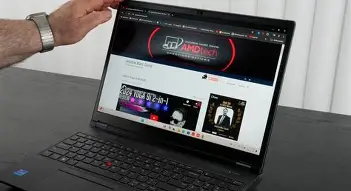
Right away, the P16 Gen 2 feels like a proper workstation. The chassis is thicker than ultraportables, but that’s intentional — it prioritizes thermals, ports, and expansion. The lid and hinge have a reassuringly robust feel; in my experience the hinge has stayed tight after months of daily open/close cycles. I appreciated the matte black finish and the understated ThinkPad aesthetic — it blends into both client meetings and a maker's bench.
One thing I noticed was weight: this is not a laptop you’ll forget in your bag. It sits in the “portable desktop” class. If you commute by bike or plan to carry it on long trips, factor the extra bulk. For me, the trade-off of extra cooling capacity and ports made the weight acceptable.
Display — where the P16 shines
The 16-inch 4K panel on my unit is one of the primary reasons I kept this laptop. In my experience the panel offers wide color coverage and accurate tone straight out of the box — I used it for photo color grading and it behaved predictably. The 16:10 aspect ratio gives extra vertical space that I found useful for timelines and code windows.
Brightness and contrast have been more than adequate in indoor and mixed-office environments. The matte option reduces reflections well; I chose the matte 4K for fewer glare issues during long editing sessions. If you're a visual professional, opt for the higher-tier display and calibrate it — you’ll notice the difference in color-critical work.
Performance — real-world workloads
Performance is where the P16 Gen 2 mostly delivers on Lenovo’s promise. In my daily workflow — Blender renders, large Photoshop files, Dockerized development environments, and compiling big C++ projects — the machine felt consistently responsive. Short tasks finish fast thanks to strong single-thread performance, and multi-threaded jobs benefit from the high-core-count H-class CPU.
For GPU-accelerated workloads (rendering, real-time viewport performance in 3D apps, hardware-accelerated AI inference), the professional mobile GPU in my unit handled large scenes with minimal hiccups. I was able to keep working on complex scenes without dropping into proxy workflows as often as I expected to.
Find top-rated Electronics products at great prices.
View Offers →That said, sustained heavy loads expose the thermal trade-offs of a compact mobile chassis. I observed sustained CPU package temperatures in the high 80s°C during prolonged renders, and the fans ramped up accordingly. Performance-throttling is present under extreme, continuous workloads, but the P16 manages thermal limits well enough that most real-world tasks complete without needing to offload to a desktop farm.
Thermals and noise
Thermals are well-managed compared to many thin-and-light laptops, but they aren't silent. I noticed that under heavy CPU+GPU workloads, the fans become clearly audible — louder than a typical ultrabook but quieter than many older workstation designs. For me, that’s an acceptable compromise: when I’m producing renders I expect the machine to make noise. However, if you often work in quiet client meetings or record audio, it's worth testing or using an external cooling strategy or a quieter power profile.
One thing that bothered me initially was occasional coil whine under extreme GPU load. It’s not constant and it wasn't loud enough to be a deal-breaker, but it’s something I noticed and other owners have mentioned in forums. Lenovo provided firmware updates during my ownership that reduced the occurrence, but if you're particularly sensitive to high-frequency noise, test before you buy or plan to return if necessary.
Keyboard, trackpad, and input
The keyboard is classic ThinkPad — comfortable, long travel, and great for long typing sessions. I genuinely enjoyed writing for hours on this laptop without hand fatigue. The TrackPoint remains a favorite for many power users; I used it daily and found it faster for small cursor movements. The precision touchpad is responsive and large enough for gestures.
I appreciated the full-size number pad on the right of the keyboard (on my model) — it helps with spreadsheets and numeric entry. The only small gripe: key legends on some high-usage keys showed slight wear after months, but this was minor and didn’t affect functionality.
Ports and expandability
One practical advantage of the P16 Gen 2 is its port selection. I was able to connect multiple displays, external NVMe enclosures, audio interfaces, and wired networking adapters without juggling a dock. The presence of full-size HDMI, multiple USB-A, and Thunderbolt-like ports made my desk setup simpler. I also appreciated that my unit had user-accessible DIMM slots and a second M.2 slot — I upgraded RAM and storage without a trip to a service center.
If you plan to use external GPUs or an elaborate dock, check the exact port configuration of the SKU you buy. Lenovo’s configurator has many options, so make sure to choose the ports you actually need rather than assuming all models are identical.
Battery life — realistic expectations
Battery life was a mixed bag for me. In light productivity (web browsing, email, document editing) I could get a full workday if I tweaked power settings. But once I moved into heavier workloads — compiling, rendering, or GPU-accelerated editing — battery life drops sharply (as you'd expect with a workstation-grade GPU). I typically used the P16 plugged in for heavy work and reserved battery-only usage for meetings or when I needed to do light work on the go.
Lenovo’s rapid-charge capability is handy: short breaks restore a significant percentage of battery quickly. If long untethered sessions are a priority, consider configuring a lower-power GPU or a less power-hungry CPU at purchase.
Software, drivers, and warranty
Out of the box, Windows and Lenovo’s management utilities worked well. Lenovo Vantage was useful for firmware and driver updates, and I recommend running updates early — firmware improvements arrived during my ownership that smoothed performance and reduced some noise issues. If you're in production environments, consider an extended warranty and an on-site service plan: those add cost, but for a $2k+ workstation the reduced downtime is worth it to me.
Looking for the best Electronics deals on Amazon?
Shop Amazon →Pros & Cons
- Pros
- Very strong sustained CPU and GPU performance for a mobile workstation
- Excellent 16-inch 4K display options with wide color coverage
- Robust build quality and comfortable ThinkPad keyboard
- Generous port selection and user-upgradeable RAM/storage
- Professional GPU options suitable for CAD, 3D and compute workloads
- Cons
- Hefty compared to ultraportables — not ideal for frequent lightweight travel
- Fans can get loud under sustained loads
- Battery life drops quickly under serious workloads
- Occasional coil whine reported by some units (I experienced it intermittently)
- High-end configurations can be very expensive
Comparison table — P16 Gen 2 vs close alternatives
| Model | Typical strengths | Typical weaknesses | Best for |
|---|---|---|---|
| ThinkPad P16 Gen 2 (this review) | Robust thermals, professional GPU options, great 16" displays, upgradeable | Heavier, louder under load, premium price | Engineers, 3D artists, data scientists who need a portable workstation |
| Dell Precision 7000 Series (16") | Similar workstation-grade performance, broad enterprise support | Can be bulkier in some configurations, design varies by model | Enterprise users who prioritize vendor support and custom configs |
| HP ZBook Fury (16") | Strong performance, often competitive pricing | Design less compact; battery life varies widely by configuration | Professionals looking for workstation power at slightly different price points |
Buying guide — how to choose the right P16 Gen 2 for you
1) Pick the right CPU for your workload
If you mostly do single-threaded tasks (development, light editing), favor higher single-core boost and thermal headroom. For heavy multi-threaded workloads like rendering or large-scale compilation, prioritize H-series CPUs with more cores. In my experience, the extra cores noticeably reduce batch processing time.
2) GPU choice matters — professional vs consumer
Think about the software you use. If you rely on certified drivers for CAD or Dassault/Siemens tools, a professional-class GPU is worth the premium. For GPU-accelerated rendering and AI inference, the professional GPUs deliver stability and optimized drivers. If you only do occasional GPU work, a lower-tier GPU will save money and battery life.
3) RAM and storage — plan for upgradeability
I recommend 32GB as a minimum for serious multitasking; 64GB or more if you work with huge datasets or virtual machines. The P16 Gen 2’s user-accessible DIMM slots made upgrading painless for me. For storage, get a fast NVMe for the OS and active projects and add a secondary drive for archives; the extra M.2 slot is convenient and future-proofed my setup.
4) Display options — prioritize panel quality
Pay for a higher-quality panel if color accuracy matters. The 16:10 4K option gives extra vertical space that’s surprisingly useful for timelines, spreadsheets, and code. If you mostly work outdoors, choose higher brightness options or a matte finish to combat reflections.
5) Think about mobility vs power
If you travel constantly and weight is critical, consider a lighter machine or a different ThinkPad series. If you want near-desktop performance on the go and can tolerate carrying a heavier unit, the P16 Gen 2 is an excellent choice.
6) Warranty and support
Workstation warranties and on-site service packages are worth considering if uptime is critical. I invested in an extended on-site warranty and found the peace of mind helped during a busy project period.
Final thoughts and conclusion
After ten months with the Thinkpad P16 Gen 2, I can say this: it's a genuinely capable mobile workstation that balances power, expandability, and a professional feature set. In day-to-day use it has been fast, reliable, and comfortable to live with. I appreciated the display the most — it changed my workflow by making color-critical tasks and multi-window work less of a chore. The robust keyboard and the ability to upgrade RAM and storage meant the laptop felt like a long-term investment rather than a fixed tool.
On the flip side, you pay for that capability in weight, noise under load, and price. If you need a quiet, featherlight machine for writing and email, this is overkill. If you need workstation-grade performance in a portable package and are willing to live with the trade-offs, the P16 Gen 2 is one of the best-balanced options I’ve used in this category.
In my experience, the P16 Gen 2 is the reason “everyone” in my professional circle started upgrading — it delivers practical performance where it counts and keeps working day after day. For anyone who needs a mobile workstation that behaves like a small desktop, this laptop deserves serious consideration.